
Look through your customer’s eyes: Your marketing makes zero sense
Many of us spend our entire day staring at colorful dashboards, chasing vanity KPIs, and obsessing over "channel performance." We look at CTRs, open rates, and attribution models like they’re the Holy Grail.
And look, I’m not throwing stones here. I’ve done the exact same thing. It’s a totally logical behavior when that’s exactly what we’re judged on and what our bosses care about. If your bonus depends on a specific MQL target from LinkedIn, you’re going to hyper-focus on LinkedIn.
The problem is, while we’re staring at our spreadsheets, we stop looking at the actual experience.
I’ve spent years hosting CC Therapy and wrote Customer Experience Unearthed, so I’ve taken the habit of looking at things with customers' eyes. And from that perspective? It’s often a disaster. We aren’t building journeys; we’re building a series of disconnected rooms with no hallways in between.

The "Silo" Blindness
When you look at your marketing from the inside, everything looks fine. You see a "successful" LinkedIn campaign here and a "high-performing" newsletter there. But try to actually walk that path as a human being.
You click a cool, punchy ad about "Saving Time," and you land on a generic product page that talks about "Enterprise Scalability." What happened to the time-saving? Then, you get a retargeting ad two days later for a product you already looked at, but with a completely different tone of voice and a different offer.
It's like having a conversation with someone who forgets your name every thirty seconds. It doesn’t "stick." It just annoys.
Look, I’m not saying this happens because people are bad at their jobs. In fact, it’s usually a totally logical response to the environment we work in. It usually boils down to three things that are almost entirely out of your control:
- The "Bright Shiny Object" from above
We’ve all been there. Your CEO walks in on a Monday morning because his nephew told him TikTok is "lit," or the Board sees a competitor running a specific ad and panics. Suddenly, a new "urgent" activity is dumped on your desk. "We need to be at this event!" or "Why aren't we doing more on Threads?" You’re forced to tack on yet another piece to the puzzle without any time to actually figure out how it fits into the bigger picture. It's just more noise for the customer. - The Attribution Hunger Games
Your teams aren't collaborating because they aren't incentivized to. You’ve got the Social team, the Email team, and the Events team, and they’re all living in their own bubbles. Each one is fighting for their life to prove their ROI. If the Social guy finds a "hacky" message that gets clicks but contradicts the whitepaper the Content team just wrote, he’s going to use it anyway because that’s what his bonus is tied to. They’re not playing for the same team; they’re playing for the best attribution score. - The Messaging House is on fire (or doesn't exist)
Either you don't have a central messaging house, or it’s a 50-page PDF that nobody has opened since 2022. Without a clear, living document that defines exactly what we’re saying and who we’re saying it to, everyone just guesses. People end up relying on "whatever worked last time," even if it has nothing to do with the current campaign's goals.
The result? A journey that leads nowhere.
When you combine "management by whim," "internal competition," and "messaging chaos," the customer experience is the first thing to die. You aren't building a path; you're building hurdles. And your customer is the one who suffers.
You’ve got a customer who is interested, but every time they interact with you, they have to work harder to understand what you actually do. Eventually, they just get tired of trying to solve the puzzle and they go to a competitor who makes it easy.
Good channels don’t equal a good journey
I see this all the time: a company has a 10/10 social media game and a 10/10 email marketing team. On paper, they’re winning. But when you look at the total experience, it’s a mess.
Here’s the thing: Success in a silo is often a failure for the brand. If your lack of consistency means the customer has to "re-learn" what you’re offering every time they switch platforms, you’re losing business. Period. You’re making them do the hard work of connecting the dots—work they simply won't do.
The "Noise" Tax
Think about it. We’re hit with thousands of messages every single day. It’s relentless. You see ads on TV, on billboards while you’re driving, in your podcasts, and all over social media. Now, even your TV’s screensaver is trying to sell you insurance, and I’m pretty sure my smart fridge is about five minutes away from shouting at me about a discount on oat milk.
In a world this loud, how do you expect a message to actually "stick"?
The only way to win is through coherent repetition. When your message is fragmented, you’re paying a "noise tax." Because your messages feel different every time they hit the customer, they don't build on each other. You have to hammer the message ten times harder just to get the same level of awareness. You’re basically paying to start the conversation from scratch every single time you switch channels.
If you keep hammering different nails, you’ll never hang the picture. You just end up with a wall full of holes and a very frustrated customer.
Consistency is a multiplier
When you have a clear message that is repeated (not just copied and pasted, but logically flowed) across channels, something magical happens. The cost of acquisition drops. Why? Because the second and third touchpoints aren't "new" information; they are reinforcements of the first.
But to get there, you need to stop thinking about your favorite channels and start thinking about the glue that holds them together.
How to fix the mess: The "Kitchen" approach
So, how do you stop the bleeding? It’s not about buying more tools or increasing your ad spend. It’s about changing how you build. You need to stop being a "project manager" and start being a "chef."
I’ve found that using a framework to structure my campaigns is the only way to make this work. It breaks down into three stages that actually put customer (the person eating the meal) first.

Phase 1: Rally (Mis en Place)
Imagine you want to cook a world-class dinner. You don't just start throwing random stuff in a pan and hope it tastes like Boeuf Bourguignon. You start with Rallying.
- The Messaging House: This is your foundation. A good messaging house isn't a 40-page fluff piece. It needs three things: a Core Message (the "Big Idea"), Challenges (the "Why"), and Proof Points (the "How"). If you don't have this, your cooks are all making different dishes.
- The Audience first: Many marketers start with the product. "I have this cool feature, let’s sell it!" Wrong. You start with the customer. Who are they? What do they actually care about? When you pick a super-specific audience, you can articulate the whole campaign around their needs, not your ego.
- Inventory check: You look at your fridge. What assets do you already have that fit this specific message for this specific audience? Use those. Ignore the rest.
This is where most of us fail. We’re so pressured by the boss to "just launch something" that we start cooking before we even know if we have salt in the cupboard.
Phase 2: Integrate (The Recipe)
Now you’ve got your ingredients (assets), your tools (channels), and your crew. But you aren't cooking yet. You need a blueprint, a recipe. This is the Integrate phase.
Think about it: you peel the vegetables, then you cut them, then you throw them in the pan. If you try to peel them after they’re boiled, you’ve got a soggy mess. Your marketing is the same.
You need to map out the flow from the customer's eyes:
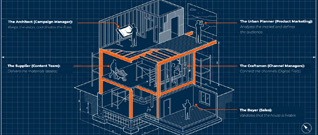
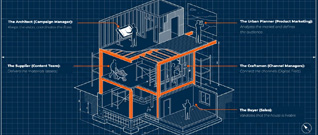
- The Appetizer: Start with high-level info on a channel built for discovery (like LinkedIn).
- The Main Course: People who engage get moved to a deeper nurture, maybe an email with real value.
- The Digestif: Only those who show keen interest get a call from a BDR.
You're creating a logical flow where each channel "hands off" the customer to the next one. No dead-ends. No confusing jumps. Just a tasty, logical recipe. Each dish naturally flows to the next. You don't start with a refined dish to then bring KFC on a platter.
Phase 3: Orchestrate (The Dinner Service)
The guests arrive. You do the actual cooking. This is the Orchestrate phase: the launch.
But here’s the secret: the first time you cook a new dish, it’s never perfect. Maybe the fish was a bit undercooked or the sauce needed more salt. This is where you iterate.
And I don't mean just staring at a dashboard. I mean looking through your customers' eyes. Did they get stuck at the "form" stage? Did they click the email but leave the landing page immediately? You monitor, you tweak, and you improve the flow in real-time.
You’re not just looking for "numbers"; you’re looking for friction. You fix the dead-ends you missed during the planning. The next "guests" who walk through your journey should have an even better experience.
The Bottom Line
Your customers don't want to be "marketed to", they want to be served. Stop building disjointed rooms and start building a flow that makes sense. Use a framework, get your kitchen in order, and for the love of God, stop sending people into culs-de-sac.
Marketing is just like cooking: if the process is a mess, the result will taste like it.
Ready to clean up your kitchen?
If you're reading this and thinking, "Yeah, my marketing kitchen is currently on fire and my customers are definitely eating a soggy mess," don't panic. We’ve all been there. The pressure to "just do more" is real, but as we’ve seen, more noise just leads to more dead-ends.
The good news is that you don't need a miracle to fix it; you just need a system. You need to stop guessing and start building "highways" for your customers.
I’ve found that the best way to keep myself (and my team) on track is to use a proven methodology. It’s what I call a framework to structure my campaigns. It’s the "recipe book" that helps me Rally my crew, Integrate my channels, and Orchestrate a journey that actually makes sense when you look at it through your customers' eyes.
If you want to stop building mazes and start building flows that stick, you should check out the RIO Integrated Marketing Campaign Framework. It’s a dead-simple way to make sure you never send a customer into a cul-de-sac ever again.
Go take a look, walk your own journey, and start cooking something your customers will actually enjoy.
FAQ
- Why does my marketing feel so disjointed across different channels?
-
Most of the time, it’s because we’re suffering from "Silo Blindness." You’ve got your social media team, your email gurus, and your ads manager all working in their own little bubbles. They aren't incentivized to talk to each other; they’re incentivized to hit their own channel-specific KPIs. When you look at your marketing from the inside, you see successful silos. But when your customer looks at it, they see a brand with a split personality because nobody bothered to build the hallways between those rooms. It’s a logical result of how we’re managed, but it’s a disaster for the person actually trying to buy from you.
- How do I actually improve the customer journey without just spending more money?
-
You stop focusing on the "tools" and start focusing on the "flow." Improving the journey isn't about adding a new chatbot or a fancy automation sequence; it’s about removing the dead-ends. You have to walk the path yourself. If you click an ad and land on a page that doesn't immediately answer the promise of that ad, you’ve failed. Improving the journey means ensuring every single touchpoint is a bridge to the next logical step. It’s about being a chef who knows exactly which ingredient follows the next, rather than just throwing everything into a pan at once and hoping it tastes okay.
- Why is my ROI dropping even though my engagement rates look good?
-
You’re likely paying a "Noise Tax." In a world where people are hit by thousands of ads every day—from their phones to their smart fridges—the only way to get through is through coherent repetition. If your message is slightly different on every channel, it never "sticks." You’re essentially starting the conversation from zero every time a customer sees you somewhere else. You have to hammer the same message over and over for it to sink in. If you aren’t consistent, you have to spend way more on ads just to get the same level of awareness that a structured, integrated campaign would get for half the price.
- What exactly is a messaging house and why is it mandatory?
-
Think of a messaging house as your master recipe. Without it, your "cooks" are all guessing. A real messaging house needs three things: a core message (the big idea), key pillars (the reasons why), and proof points (the data or facts). It’s a living document that keeps the whole team aligned. If you don't have this—or if it's buried in a PDF nobody reads—then your social media guy will just write whatever "feels right" that day. A messaging house ensures that whether a customer sees an ad or talks to a salesperson, they’re hearing the same story.
- How do I make my marketing message actually stick in a crowded market?
-
Stickiness is a byproduct of orchestration. You can't just blast people and expect them to remember you. You need a framework to structure your campaigns so the message hits from different angles but feels like one continuous conversation. When the timing is right and the message is consistent, you stop being "another ad" and start being a familiar solution. It’s about moving from "interruption" to "immersion." If the customer sees the same core value reflected across LinkedIn, email, and a webinar, it finally enters their subconscious.
- Should I start my campaign planning with my product features or my audience?
-
If you want to be customer-centric, you have to start with the customer. It sounds obvious, but many of us still start with a product update or a new feature because that's what the board wants to push. To fix a broken journey, you have to flip the script. Pick a super-specific audience and build the entire campaign around their specific pains and needs. When you start with the person, the journey becomes a flow. When you start with the product, the journey becomes a sales pitch. People love to buy, but they hate being sold to.
- What are the biggest causes of "dead-ends" in a marketing campaign?
-
Dead-ends usually happen during the "Rally" phase—or the lack thereof. It's the "Bright Shiny Object" syndrome where a manager dumps a new task on your desk because a competitor did it, and you’re forced to tack it on without a plan. Another huge cause is the "Attribution Hunger Games," where teams hide their data or refuse to pass leads because they want to claim all the credit. When teams don't collaborate, the customer is the one who falls through the cracks. If there isn't a clear "what's next" for every single asset you produce, you've built a dead-end.
- How can I get my different marketing teams to actually work together?
-
You have to change the way you "Rally" the crew. Instead of giving everyone separate targets, you align them around a single campaign blueprint. You bring all the ingredients—the content, the martech, the channels—to the table before you start execution. By using a framework to structure my campaigns, you force the "email people" and the "social people" to agree on the flow before they ever start creating. It’s about building the recipe together so everyone knows that if the appetizer (social) is late, the main course (email) is going to be ruined.


 Entrepreneur, international CMO, and Certified Customer Experience Professional (CCXP), I have spent the last 16 years driving growth and high-level marketing strategy across Europe and Asia.
Throughout my career, I have managed global teams to build brands and generate demand, while also founding myfairtool, authoring two industry books, hosting marketing podcasts, and developing the RIO Integrated Marketing Campaign Framework.
In this blog, I share my frameworks, insights, and experience. Please feel free to reach out if you have specific projects for which you would need my expertise.
Julien Rio.










 Français
 English